Traditional German Beef Broth (Rinderbrühe)
A proper German beef broth, or Rinderbrühe, is clear, deeply savory, and intentionally restrained. This is not a beef broth built on roasted flavors or aggressive aromatics. Instead, it’s a clean, balanced foundation meant to support classic soups like Leberknödelsuppe, Grießnockerlsuppe, Pfannkuchensuppe, or simply a bowl of hot broth served with dumplings or pancake strips.
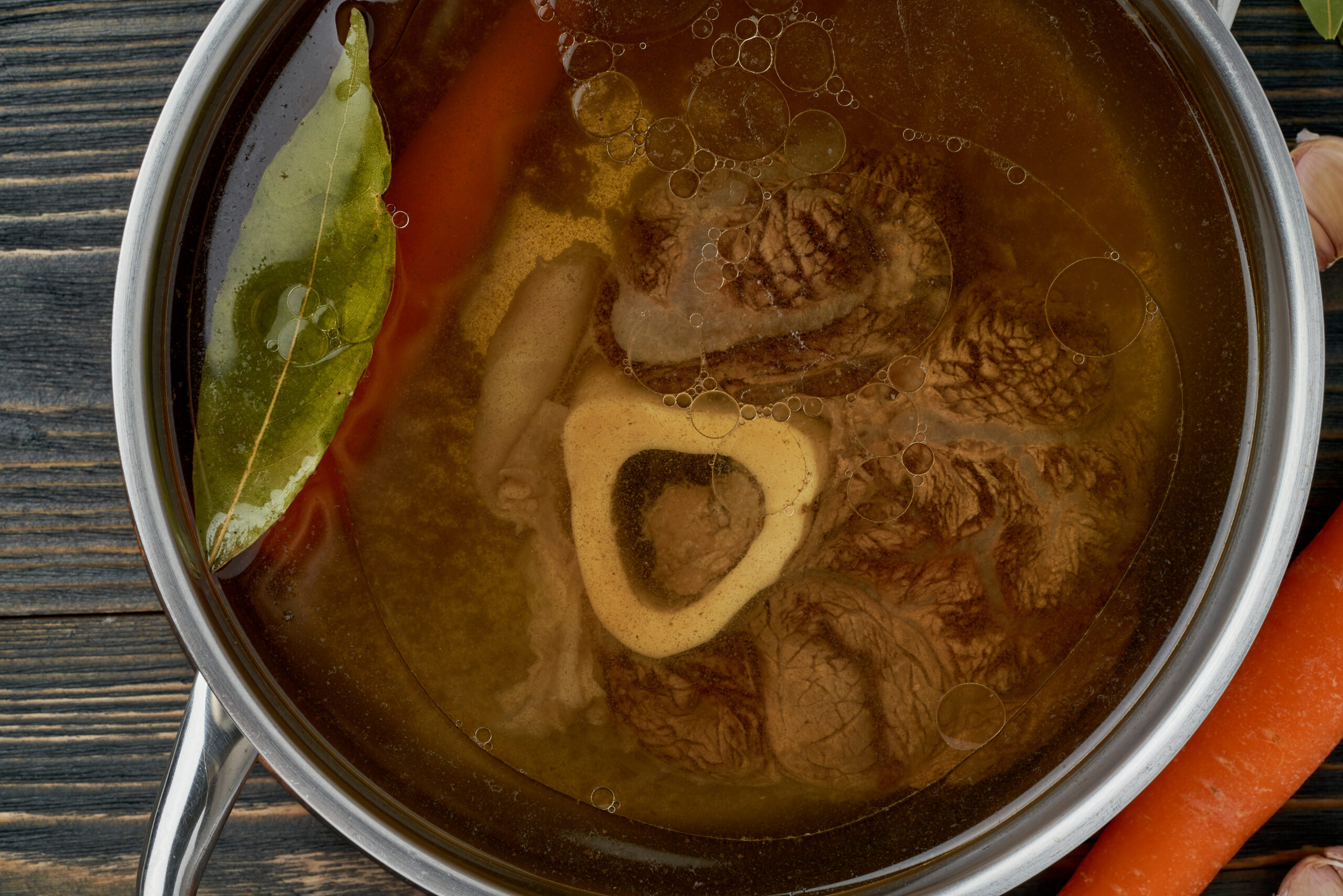
What gives this broth its signature flavor is a combination of marrow bones, beef shin, classic soup vegetables (Suppengrün), and warming spices like juniper berries and allspice, which are very traditional in German cooking.
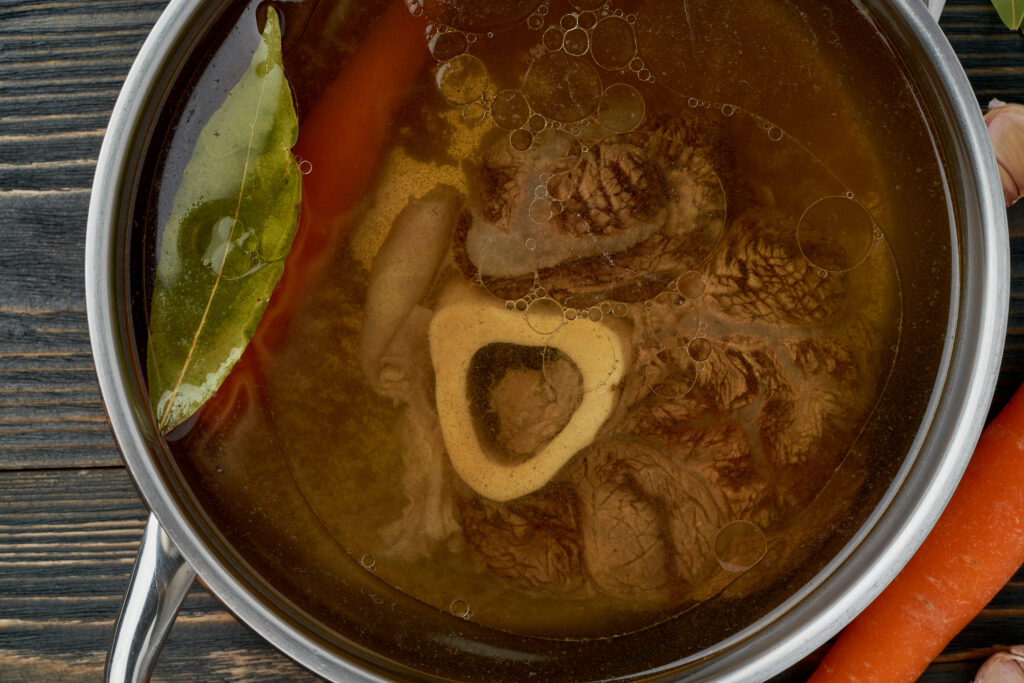
Suppengemüse: The German Soup Vegetable Base That Makes This Beef Broth German
In Germany, broth starts with Suppengemüse, not mirepoix.
Traditional Suppengemüse usually includes:
- Celery root (celeriac)
- Carrot
- Leek
- Onion
- Parsley (often with stems)
This differs significantly from French mirepoix or the American adaptation of it. Mirepoix relies on onion, carrot, and celery stalk, often in a strict ratio and frequently sautéed in fat. Suppengemüse, by contrast, uses celery root instead of celery stalk, adds leek and parsley, and is almost always added raw to the broth.
The flavor profile is cleaner, earthier, and less sweet. Celery root brings depth without the sharpness of celery stalks, while leek adds softness rather than bite. The vegetables are meant to support the beef, not compete with it.
Browning the Onion (and Only the Onion)
One classic German technique that defines this broth is browning the onion directly in the pot with no oil. The onion halves are placed cut-side down and allowed to become very dark—almost black.
This step:
- Adds the signature golden-brown color
- Contributes a subtle bitterness that balances the richness of marrow bones
- Mimics traditional home-kitchen methods found across Bavaria and southern Germany
Using an enamel cast iron pot, such as a 4-quart Staub, makes this especially easy because the heat is even and controlled.
Importantly, nothing else is browned.
Why the Meat Is Not Browned
Unlike many American or French stocks, German beef broth does not brown the meat. Browning would introduce roasted flavors that darken and cloud the broth, shifting it away from its intended purpose.
By keeping the beef shin and marrow bones raw and adding them directly to cold water, you get:
- A clearer final broth
- A pure beef flavor
- A lighter, cleaner mouthfeel
Cold Water and Slow Extraction
Cold water is essential. As the pot slowly heats, collagen, minerals, and flavor are gently extracted from the bones and meat.
As the temperature rises, you’ll see a gray foam forming on the surface.
Skimming the Foam
This foam is made up of coagulated proteins released from the beef and bones. Skimming it off is not optional—it’s a critical step.
Regular skimming:
- Keeps the broth clear
- Prevents bitter or muddy flavors
- Results in a cleaner, more elegant broth
This is one of those quiet techniques that separates everyday broth from truly good broth.
Gentle Simmer, Not a Boil
Once the Suppengemüse, herbs, and spices are added, the broth should stay at a gentle simmer, never a rolling boil.
Boiling will emulsify fat into the liquid and make the broth cloudy. German kitchens prioritize patience here—low heat, occasional skimming, and time.
The total cooking time is about 2½ hours, which is enough to extract flavor without overcooking the vegetables or dulling the aromatics.
Juniper berries, allspice, bay leaves, parsley, and peppercorns add warmth and subtle complexity without dominating the beef.
Straining and Cooling Your Beef Broth
After simmering, the broth is strained through a fine-mesh sieve. The vegetables and herbs have done their job and can be discarded. The beef shin can be saved for another dish if desired.
As the broth cools in the refrigerator, it may gel slightly. This is exactly what you want—it’s a sign of good collagen extraction from the marrow bones and connective tissue.
Final Seasoning and Maggi
The broth is lightly salted during cooking, but final seasoning should always happen after reheating. Taste first, then adjust with salt.
In many German homes, the finishing touch is a small splash of REAL German Maggi Würze just before serving. Maggi isn’t meant to overpower the broth—it simply enhances the savory notes and rounds everything out. A few drops are enough.
This is optional, but deeply traditional.
Rinderbrühe – Beef Broth

Equipment
- 1 Cast Iron Dutch Over My favorite is the Staub enamel covered Dutch oven.
Ingredients
- 2 marrow bones
- 1 lb beef shin
- 4 oz celery root celeriac, peeled and cut into large chunks
- 1 small carrot cut into large chunks
- 1 small leek cleaned and cut into large pieces
- 1 small onion cut in half
- 2 bay leaves
- ½ bunch fresh parsley stems included
- 10 whole peppercorns
- 4 allspice berries
- 4 juniper berries
- 1 tbsp salt
- Cold water enough to cover
Instructions
- Place your 4-quart enamel cast iron pot over medium heat. Add the onion halves, cut side down, directly to the dry pot with no oil. Allow them to brown deeply until almost blackened on the cut surface. This step adds color and depth to the broth.
- Add the marrow bones and beef shin to the pot. Pour in enough cold water to fully cover the meat and bones.
- Slowly bring the pot to a gentle simmer over medium heat. As the broth heats, skim off any gray foam or impurities that rise to the surface.
- Once the broth is simmering, add the celery root, carrot, leek, bay leaves, parsley, peppercorns, allspice berries, juniper berries, and salt.
- Reduce the heat to low so the broth simmers gently. Do not let it boil. Simmer uncovered for 3 to 4 hours, occasionally skimming the surface as needed.
- When finished, strain the broth through a fine-mesh strainer. Discard the solids or reserve the meat for another use.
- Let the broth cool slightly, then refrigerate. Once chilled, remove excess fat from the surface if desired.
- Store in the refrigerator for up to 5 days or freeze for longer storage.