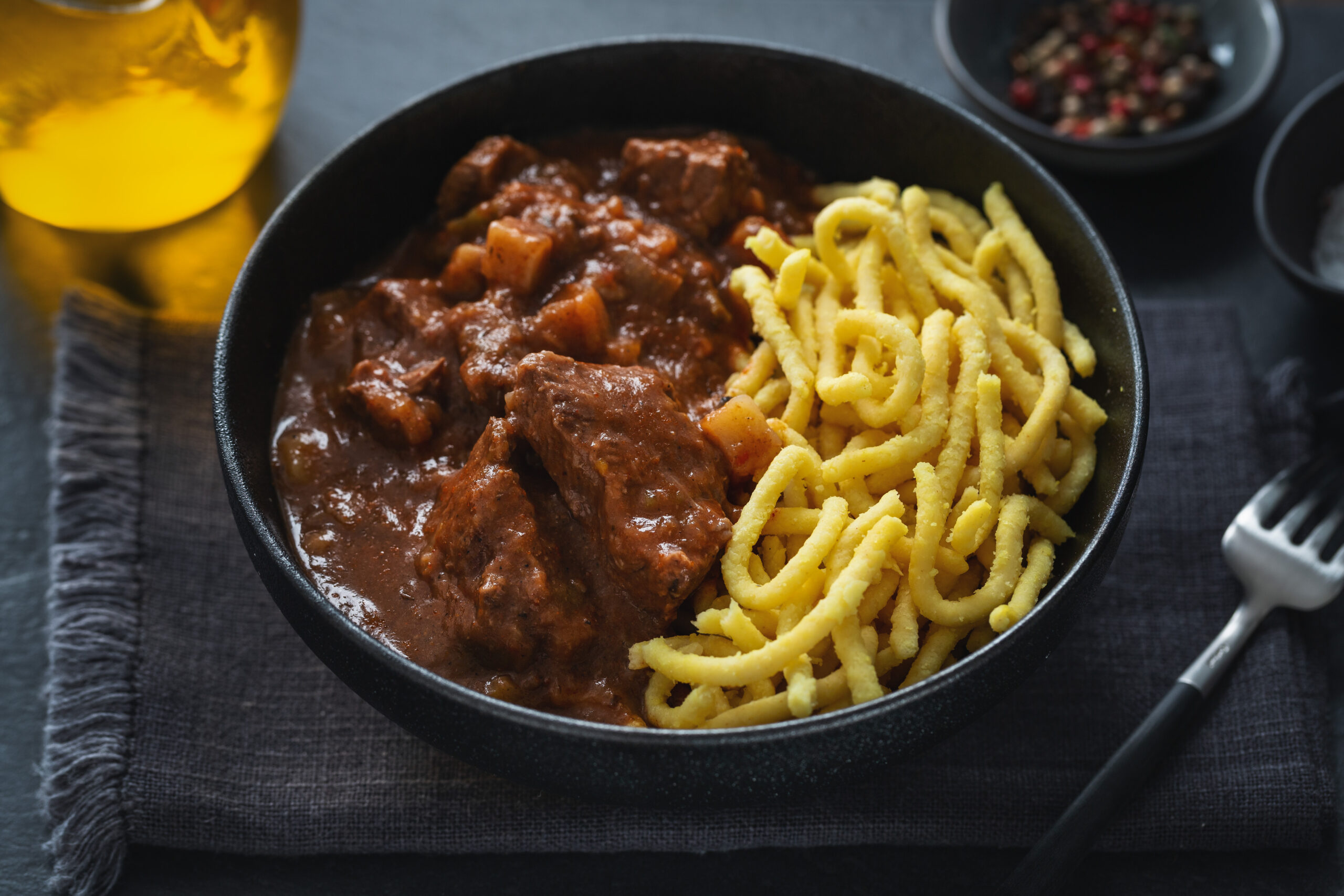
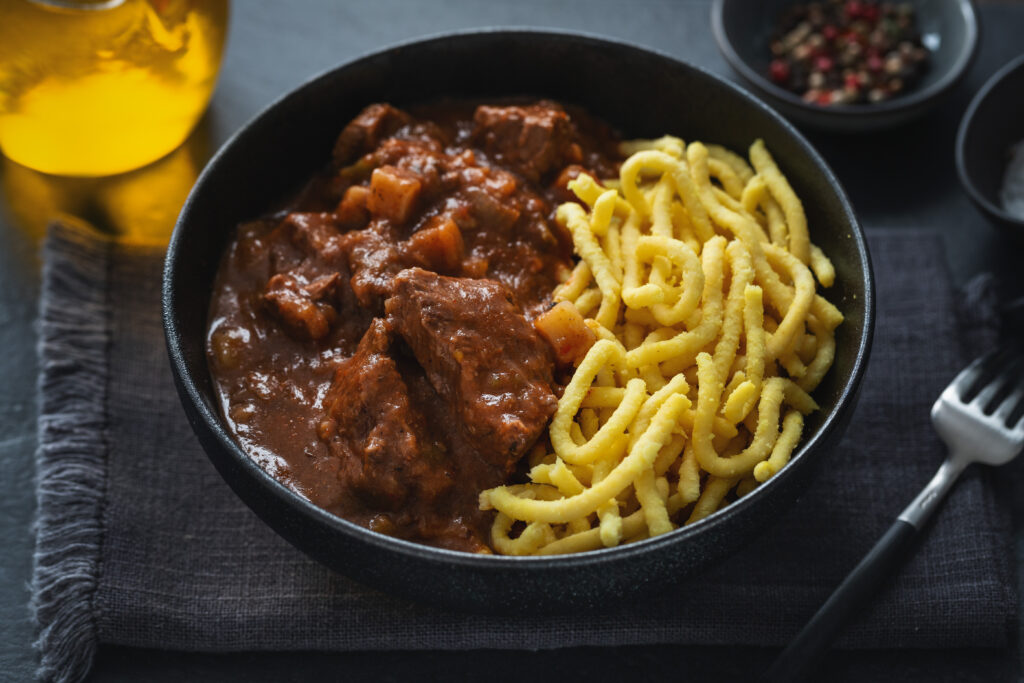
Goulash, or more specifically here, Wiener Saftgulasch is one of those dishes that shows up everywhere in Austria and southern Germany, and rarely needs an explanation. On a menu, it’s almost always just called Gulasch. The style is understood. This is the thick, meat-focused version with a glossy sauce that coats the beef rather than swimming around it. It is NOT what many Americans think of when the hear the word goulash. I don’t know where it came from or how it got bastardized, but most Americans think goulash is macaroni noodles, ground beef, and canned tomatoes. This is completely different and so much better. You’ll find it in a neighborhood Gasthaus, at a Brauerei, and just as often cooking at home for a few days’ worth of meals.
A place in the Gasthaus and the Brauerei
In a traditional Gasthaus or brewery restaurant, Gulasch makes perfect sense. It pairs well with beer, especially darker lagers and Märzen-style beers, and it’s substantial enough to stand on its own without feeling heavy. It’s also a dish that kitchens can execute consistently, which is why it shows up so often. It’s popular all throughout Germany and can have variations, but this is what I see most often. Beef with maybe only onions and garlic as a vegetable. There are also versions that are soup and served as a first course and versions that have peppers or potatoes added to make it a more hearty one-pot stew. Honestly, they are all good and I couldn’t pick my favorite.
What you’ll notice when eating it in these settings is how similar it tends to be from place to place. The beef should be tender, the sauce thick and cohesive, and the flavors balanced. No one is trying to surprise you. That’s exactly the point.
What it’s served with
Wiener Saftgulasch is rarely served alone. It’s not really a soup or a stew. It’s more of a braised meat dish that you would serve with a side. The sauce is meant to be soaked up, and there are a few classic pairings that show up again and again.
At home and in restaurants, it’s commonly served with Semmelknödel, whose soft interior and crisp exterior handle the sauce beautifully. Kartoffelknödel are another traditional option, especially in Bavaria, offering a slightly heavier, more neutral base.
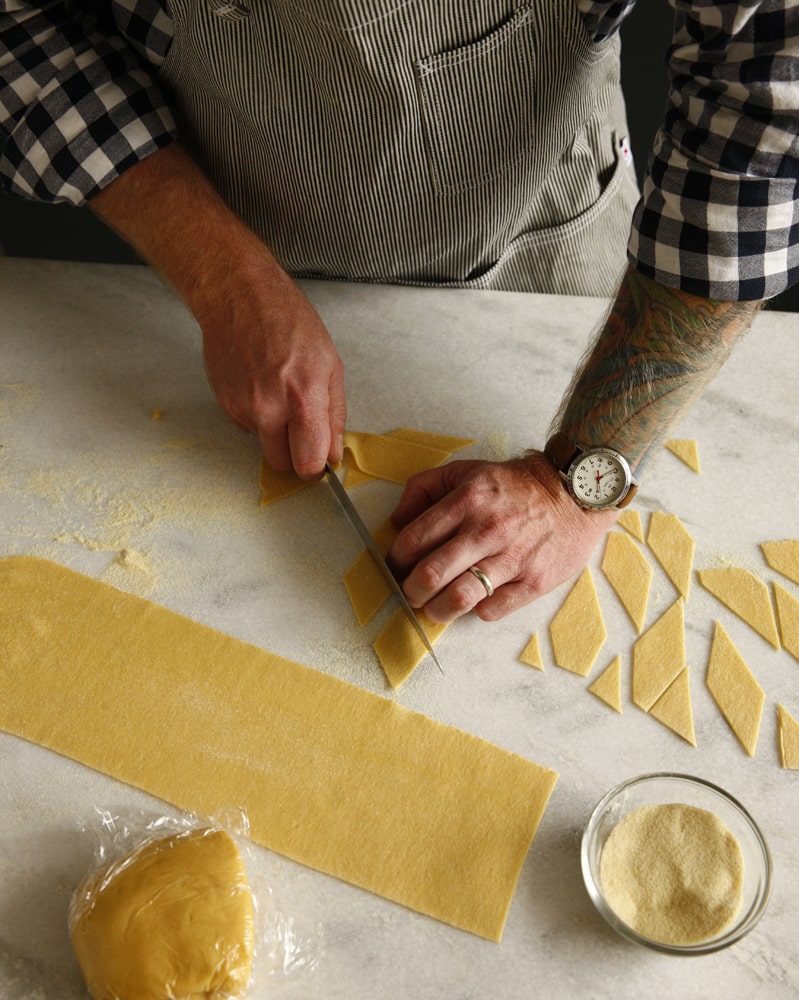
If you prefer noodles, Spätzle are a natural fit and very common in southern Germany. For something a little different, Griessbandnudeln work surprisingly well—their structure and bite hold up to the richness of the sauce without turning soft. Rice is also often served on the side, especially at home in Northern Germany.
Vienna Style Goulash - Wiener Saftgulasch
Ingredients
- 2 lb beef chuck or shoulder, cut into 1½-inch cubes
- 2 tbsp oil
- 2 tbsp butter
- 1 large onions finely sliced or diced
- 3 cloves garlic minced
- 3 tbsp tomato paste
- 3 tbsp sweet paprika
- 1 tsp spicy paprika or to taste
- 1 tsp caraway seeds lightly crushed
- 2 bay leaves
- 1 tsp dried marjoram
- 1 cup dry red wine
- 1 tbsp apple cider or red wine vinegar
- 3 cups beef stock plus more as needed
- Zest of 1 lemon
- Salt and freshly ground black pepper to taste
Instructions
Brown the beef
- Season the beef generously with salt and pepper. Heat the oil in a large heavy-bottomed pot or Dutch oven over medium-high heat. Brown the beef in batches until well-seared on all sides. Remove and set aside.
Cook the onions
- Reduce heat to medium. Add the butter to the pot, then add the onions. Cook slowly, stirring often, until deeply golden and lightly caramelized, about 15–20 minutes. This step is essential for developing the sauce.
- Add aromatics and tomato paste
- Stir in the garlic and tomato paste. Cook for 2–3 minutes until the tomato paste darkens slightly and becomes fragrant.
Bloom the spices
- Remove the pot briefly from the heat and stir in the sweet paprika, spicy paprika, caraway, bay leaves, and marjoram. This prevents the paprika from burning and turning bitter.
Deglaze
- Return the pot to the heat and pour in the red wine, scraping up any browned bits from the bottom. Let the wine reduce by about half.
Braise the goulash
- Return the beef to the pot and add the beef stock. The liquid should come just below the level of the meat. Bring to a gentle simmer, cover loosely, and cook on low heat for 2–2½ hours, stirring occasionally, until the beef is very tender.
Finish the sauce
- Stir in the lemon zest and adjust seasoning with salt and pepper. If the sauce is too thick, add a little more stock. If too thin, simmer uncovered for 10–15 minutes to reduce.
Notes
- No flour needed: Traditional Wiener Saftgulasch relies on onions and reduction for thickness, not flour.
- Paprika matters: Don't use that paprika that's been sitting in your cupboard since the 80's! Use good-quality Hungarian paprika for the best flavor and color.
- Make ahead: This dish tastes even better the next day and reheats beautifully.
- Serving suggestions: Serve with Semmelknödel, spaetzle, boiled potatoes, or crusty rye bread.
- Optional heat: Add more spicy paprika or a pinch of cayenne if you prefer extra warmth.